
TokenScavenger logo TokenScavenger

Homebrew install

Opensource. MIT License.

Scavenge local and free LLM tokens with a single OpenAI-compatible gateway.

TokenScavenger v0.3.5 routes local, free-tier, and explicit paid fallback providers with model intelligence, health-aware fallback, observability, incident workflow, and team-ready admin controls.

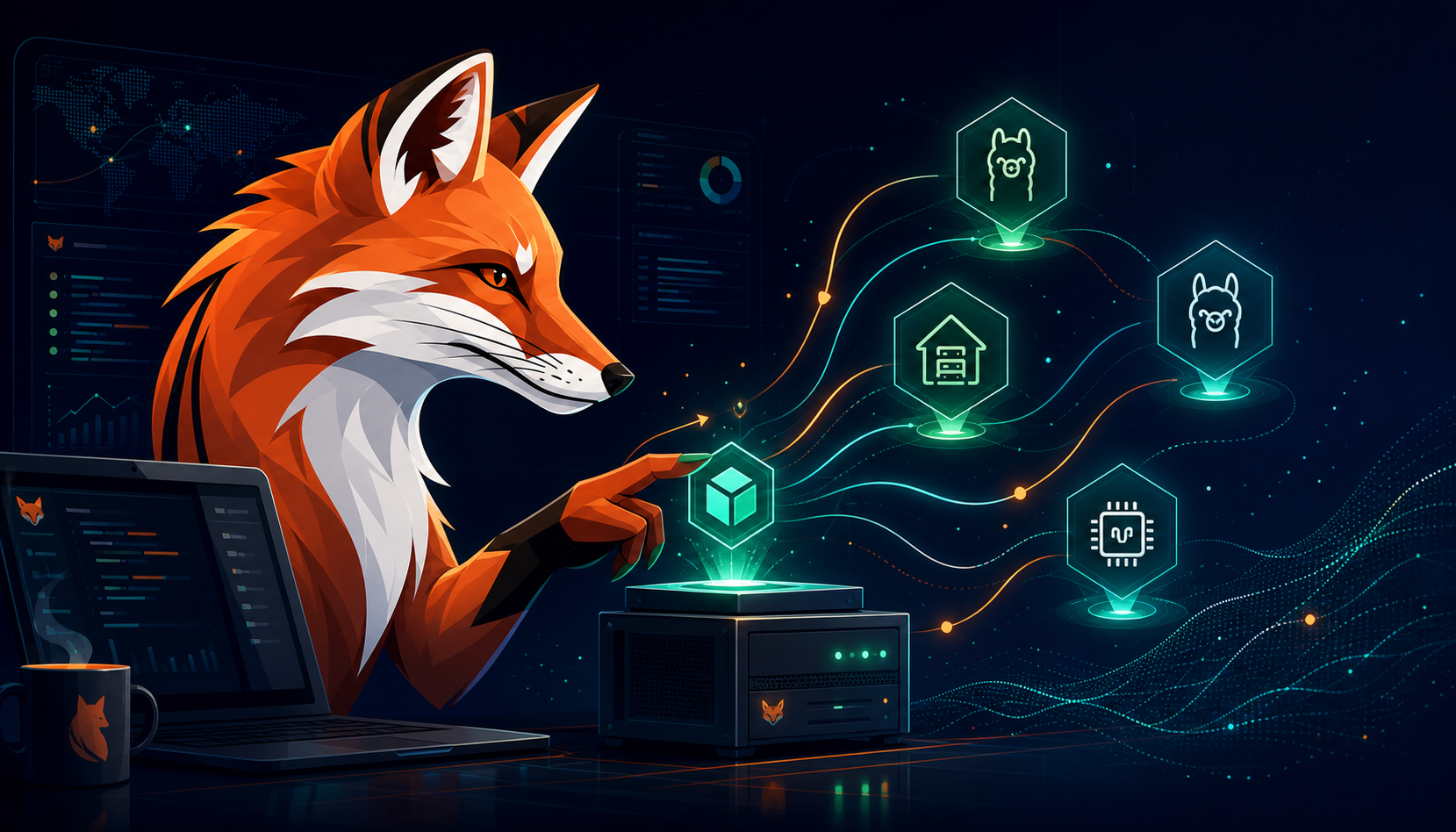
TokenScavenger fox mascot routing local provider tokens

Live status

Local and remote providers share routing intelligence, health checks, fallback, metrics, traces, and incident workflow.

LIVE

Routing signals

Live

Install

brew

Install

Install with Homebrew, or grab the release binary

On macOS and Linux, Homebrew is the simplest way to install and upgrade TokenScavenger. You can still download the self-contained release binaries directly when you need a pinned artifact or a Windows executable.

Homebrew tap

Simplest install for macOS and Linux

The kabudu/tap formula tracks the latest signed release artifacts and pins their SHA256 checksums.

brew install kabudu/tap/tokenscavenger
tokenscavenger --config ./tokenscavenger.toml

To keep it running as a service on Homebrew-managed hosts:

brew services start kabudu/tap/tokenscavenger

Release artifacts include SHA256 checksums. Prefer source builds, Docker, Kubernetes, systemd, or reverse proxy deployment?

Deployment docs

Providers

Native support for local, free-tier, and fallback endpoints

Built-in adapters cover local OpenAI-compatible servers, the most important free inference providers, and explicit paid fallback routes, with per-provider health, rate-limit handling, model group-aware routing, tool-aware routing, and embedding capability discovery.

Ollama

Local OpenAI API

llama.cpp

Local server routing

LM Studio

Desktop local models

Generic local

Any /v1 upstream

Groq

Llama 3 · Mixtral

Gemini

Free and flash models

Cloudflare

Workers AI routing

GitHub

Azure-hosted models

Mistral

Free model discovery

Cerebras

CSoft inference

NVIDIA

NIM endpoints

SiliconFlow

DeepSeek v3

DeepSeek

Paid fallback

xAI Grok

Paid fallback

Why TokenScavenger?

Tokens are the new currency of the AI era. TokenScavenger keeps local, free-tier, and approved paid routes observable, explainable, and under operator control.

Provider routing and fallback

Own routing, health checks, circuit breaking, fallback, metrics, and OpenAI-compatible upstream adapters across local, free-tier, and explicitly approved paid providers.

Local provider support

Route Ollama, llama.cpp, LM Studio, and generic local OpenAI API servers through the same gateway, including model and embedding capability probing.

Model intelligence layer

Maintain a merged model catalog with capability metadata, quality hints, context windows, tool support, embedding support, and explainable routing decisions.

Observability and incidents

Trace every request, inspect provider incidents, and export redacted diagnostic bundles when production traffic slows down or starts hitting 429s.

Team-ready admin controls

Protect the admin UI with local accounts, role-aware access, audit logging, external identity headers, and deployment-ready backup and restore guidance.

OpenAI-compatible endpoints

Keep existing OpenAI SDKs and point them at TokenScavenger for chat completions, embeddings, model listing, health, readiness, metrics, and the embedded admin UI.

Single binary runtime

Self-hosted Rust infrastructure with SQLite durability, embedded UI assets, systemd/Docker/Kubernetes deployment guides, and cross-platform release artifacts.

Homebrew and verified releases

Install from kabudu/tap, or verify release artifacts with checksums, SBOMs, attestations, and signed/notarized macOS archives.

Open Source

Built in public for self-hosted operators

TokenScavenger is MIT-licensed, inspectable, and designed to run as infrastructure you control. The routing rules, provider adapters, SQLite schema, release workflow, and operator UI live in the repository.

Transparent routing

Provider selection, fallback policy, and rate-limit behavior are visible in code, docs, logs, metrics, and the admin UI, including model intelligence and tool-aware routing for agentic requests.

Self-hosted by default

The core runtime is one Rust binary with SQLite storage and no required managed control plane.

Contributor-friendly

Provider adapters follow a shared abstraction, making new upstream integrations easier to review and maintain.

Release artifacts

Cross-platform release builds include checksums, SBOMs, attestations, and signed/notarized macOS archives so operators can verify the binary they deploy.